
Why Is Acetyl Tetrapeptide-2 Becoming a Must-Have in Anti-Age Cosmetics?
What Is Acetyl Tetrapeptide-2?
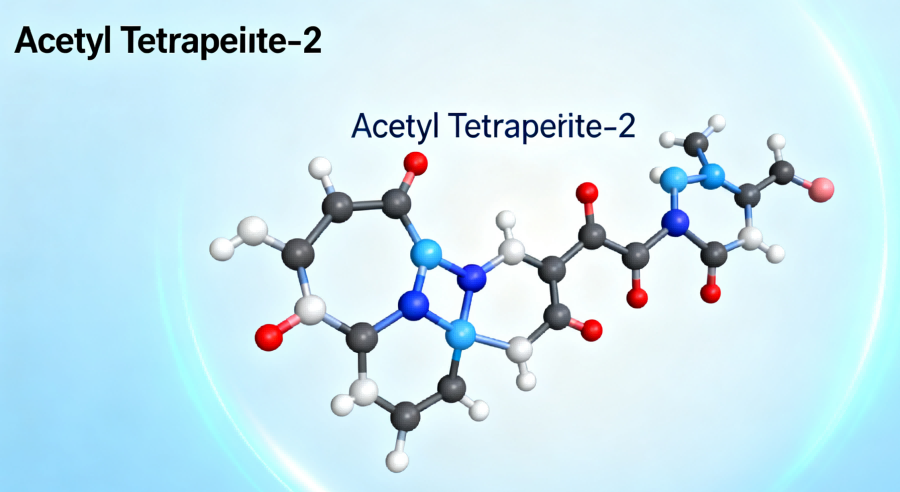
Acetyl Tetrapeptide-2, with the CAS number 757942-88-4 and molecular formula C₂₆H₃₉N₅O₉, is a synthetic bioactive peptide. It’s structured as a “mini-protein” consisting of the amino acid sequence Lys-Asp-Val-Tyr, with an acetyl group attached to its N-terminus. This acetyl modification is a critical design choice—it boosts the ingredient’s stability and enhances its ability to penetrate the skin’s stratum corneum, reaching the dermis where Anti-aging action is most needed.
Its journey into cosmetics is rooted in early research on wound healing and tissue repair. Scientists later discovered its remarkable potential in skin anti-aging, particularly in improving firmness and elasticity, which paved the way for its widespread use in high-end skincare. Unlike harsh anti-aging ingredients that disrupt the skin’s natural balance, Acetyl Tetrapeptide-2 mimics the skin’s own cellular communication signals. It works with your skin’s biology rather than against it, making it safe for long-term use and compatible with most skin types—including sensitive skin that often reacts to Retinol or strong acids.
Multi-Dimensional Benefits
- Rebuilds Skin Structure: Boosts Collagen, Elastin, and ECM Proteins
Collagen, elastin, and extracellular matrix proteins are the skin’s “support system”—their decline leads to sagging, wrinkles, and loss of firmness. Acetyl Tetrapeptide-2 targets this at the genetic level:
- It activates the TGF-β signaling pathway to upregulate Type I and Type III collagen production. A third-party study confirmed it increases collagen synthesis rate by 200%—double the efficacy of some traditional anti-aging peptides.
- It stimulates elastin, Fibulin-5, and LOXL1 production—key proteins that form the skin’s elastic network and prevent sagging.
- It enhances the expression of fibrillin-1 and laminin, strengthening the epidermal-dermal junction and improving skin integrity.
A 2022 double-blind clinical study in the Journal of Cosmetic Dermatology tested a 0.05% Acetyl Tetrapeptide-2 serum on 32 women aged 45–65. After 12 weeks, participants showed a 21% increase in skin firmness, a 17% reduction in nasolabial fold depth, and a 24% improvement in elasticity. Another in vitro study in the International Journal of Cosmetic Science found it increased Type I collagen by 38% and elastin by 42% in human dermal fibroblasts.
- Synergistic Anti-Aging with Other Peptides
When combined with other bioactive peptides, Acetyl Tetrapeptide-2 delivers amplified results. A 2024 IFSCC study using a 3D reconstructed aged skin model found that pairing it with Acetyl Hexapeptide-8 (a popular muscle-relaxing peptide) created a synergistic effect. This combination boosted Type I and Type IV collagen expression, enhanced fibrillin-1 production, and improved skin firmness and lifting in vivo—outperforming either peptide used alone. This “peptide cocktail” approach has become a cornerstone of high-performance anti-aging formulations.
- Fights Oxidative Stress and Inflammation
Environmental stressors like UV rays, pollution, and blue light trigger oxidative damage and chronic inflammation—major drivers of premature aging. Acetyl Tetrapeptide-2 defends against both:
- It activates the skin’s natural antioxidant enzymes (SOD and CAT) to neutralize free radicals, reducing oxidative damage by up to 35%.
- It inhibits the NF-κB and MAPK inflammatory pathways, cutting production of pro-inflammatory cytokines (IL-6 and TNF-α) by 63% in vitro.
- It blocks metal matrix proteases (MMP-1/MMP-3) that break down collagen, preserving the skin’s structural integrity.
A 2021 study in Cosmetics confirmed these effects: participants using an Acetyl Tetrapeptide-2 formulation showed a 40% decrease in skin inflammation markers after 8 weeks, along with brighter, more even-toned skin.
- Enhances Hydration and Barrier Function
Healthy, youthful skin depends on a strong moisture barrier. Acetyl Tetrapeptide-2 boosts production of hyaluronic acid (the skin’s natural moisturizer) and ceramides (lipids that lock in moisture). A 2020 study in Skin Pharmacology and Physiology found that a cream with 0.03% Acetyl Tetrapeptide-2 increased skin hydration by 30% after 4 weeks and improved barrier function (measured by transepidermal water loss) by 25%. This strengthens the skin’s ability to retain moisture long-term, reducing dryness-related fine lines.
- Dual Function: Anti-Aging + Odor Control
Unique among anti-aging peptides, Acetyl Tetrapeptide-2 offers a secondary benefit: body odor prevention. Its molecular structure enables it to inhibit the growth of odor-causing bacteria on the skin’s surface without irritation. This dual functionality makes it a versatile ingredient for both facial skincare and body products like firming lotions or deodorizing creams.
- Safety and Tolerance: Gentle for All Skin Types
Irritation is a common drawback of many anti-aging ingredients, but Acetyl Tetrapeptide-2 avoids this:
- A 2023 safety study in Regulatory Toxicology and Pharmacology tested it on 50 sensitive skin subjects—no redness, itching, or sensitization was reported after 21 days of daily use.
- It has a comedogenic rating of 0, meaning it won’t clog pores—ideal for acne-prone or combination skin.
- While data on pregnancy and lactation use is limited, its topical application and gentle profile make it a lower-risk option compared to more aggressive actives.
Cosmetic Applications: Formulations, Concentrations, and Brand Uses
- Optimal Concentrations
Maintenance products (moisturizers, daily serums): 0.01–0.03% for long-term anti-aging support.
Targeted treatments (serums, night creams, freeze-dried powders): 0.05–0.1% for visible wrinkle reduction and firming.
- Synergistic Ingredient Pairings
Formulators often combine it with:
- Other peptides (Palmitoyl Tripeptide-1, Acetyl Hexapeptide-8) for multi-pathway anti-aging.
- Antioxidants (vitamin C derivatives, ferulic acid) to amplify oxidative protection.
- Barrier boosters (ceramides, squalane) to enhance skin penetration.
- Hydrators (hyaluronic acid, glycerin) to maximize plumping effects.
Market Advantages: Why Brands and Consumers Choose It
Acetyl Tetrapeptide-2 stands out in the crowded anti-aging ingredient market for several key reasons:
- Cost-Effectiveness
Its optimized synthesis process and large-scale production reduce raw material costs by 35% compared to traditional peptides like hexapeptides. This allows brands to create high-efficacy products with better profit margins, making premium anti-aging accessible to more consumers.
- Formulation Versatility
It’s compatible with all major skincare formulations—including freeze-dried powders, ampoules, creams, and serums—without requiring production line adjustments. It doesn’t cause thickening or precipitation, simplifying formulation for brands.
- Consumer-Centric Benefits
Visible results within 4–8 weeks (faster than many peptide ingredients).
Gentle enough for daily use and layering with other actives.
Dual functionality (anti-aging + odor control) adds value for consumers seeking multi-tasking products.
- Science-Backed Credibility
With peer-reviewed studies, clinical trial data, and clear mechanistic research, it appeals to consumers increasingly focused on “evidence-based” skincare.
The Future of Acetyl Tetrapeptide-2 in Skincare
Current research focuses on expanding its applications—including exploring its potential in regulating immune function and treating other skin concerns. As consumers demand safer, more effective anti-aging solutions, and brands prioritize cost-efficient, versatile ingredients, Acetyl Tetrapeptide-2’s role in skincare will only grow.
- Name: Yuki
- E-mail: sales02@nahanutri.com
- WhatsApp:+8618066950297